The importance of the Banneker property comes through its role as the place where he lived, worked, and developed his scientific knowledge. Ground associated with his life connects directly to early American science and African American history.
The connection between the Bannaky or Banneky House and the later Trueth Farm shows how the property changed over time.
Land began as a Banneker family farm, later included a stone farmhouse, then functioned as Treuth family farmland, and eventually became a public historical park.
The Origins of the Banneker Property (1737)
In 1737, Robert and Mary Banneky purchased a 100-acre farm in Baltimore County. Their ownership placed them among the earliest free African American landowning families in colonial Maryland.
That status carried legal and social importance during a time when freedom and property rights were heavily restricted for people of African descent.
- Mary Banneky was the daughter of Molly Welsh, an Englishwoman who completed indentured servitude and gained independence
- Molly Welsh later purchased enslaved Africans and granted them freedom
- Robert Banneky had been one of those freed individuals before marrying Mary
View this post on Instagram
Early farm operations centered on tobacco cultivation, which required careful labor and seasonal planning.
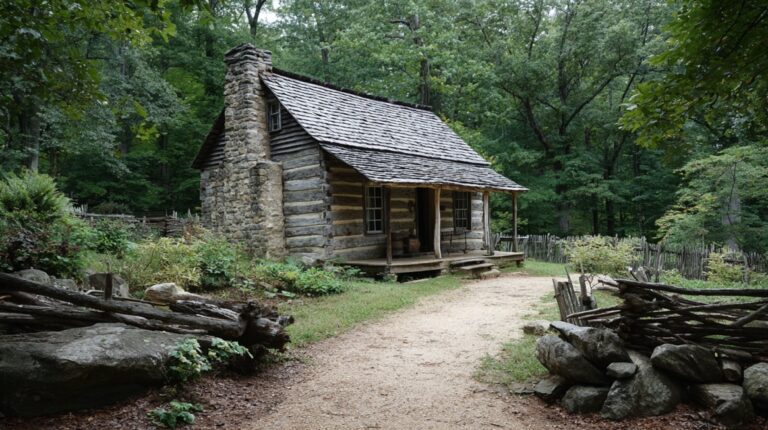
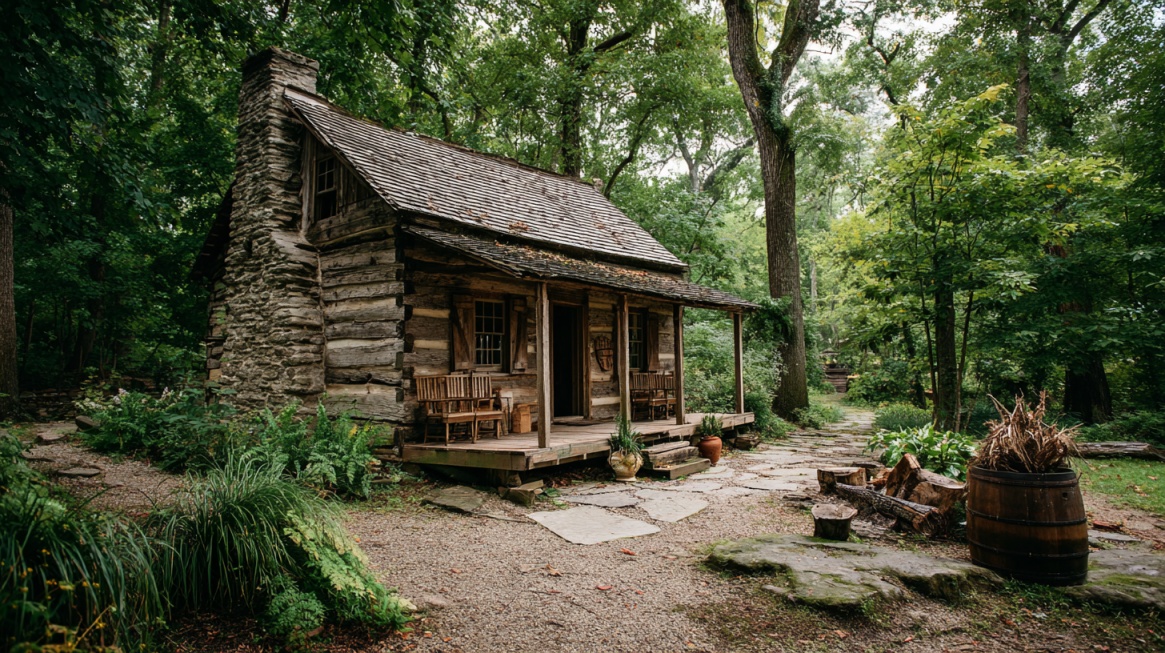
- A wooden cabin used as the primary dwelling
- Open fields used for tobacco and food crops
- A natural spring that provided water
- An orchard that contributed fruit and long-term food supply
The name “Bannaky” gradually changed into “Banneker” in written records, reflecting shifts in spelling and documentation practices during the eighteenth century.
Life on the Banneker Farm
Banneker received limited formal schooling at a small Quaker school. Most of his education came through independent study, supported by access to books and written materials.
- Books borrowed through local connections, including materials linked to the Ellicott family
- Self-guided reading in mathematics, astronomy, and mechanics
- Observation of natural patterns and cycles
Instagram ‘ਤੇ ਇਸ ਪੋਸਟ ਨੂੰ ਵੇਖੋ
Daily life combined physical labor and intellectual effort. Farming tasks occupied much of his time, yet he continued studying and experimenting alongside those responsibilities.
Around age twenty-one, he constructed a wooden striking clock. That clock remained accurate for decades and demonstrated both mechanical skill and mathematical reasoning.
- Careful tracking of celestial movement through direct observation
- Prediction of solar and lunar eclipses using calculated methods
- Preparation of astronomical tables for publication
Almanacs published between 1792 and 1797 contained detailed information such as:
- Astronomical calculations used for navigation and planning
- Tide tables important for coastal activity
- Weather predictions based on observed patterns
In 1791, Banneker wrote a letter to Thomas Jefferson.
Main arguments presented in that letter included:
| Main Argument | Explanation |
|---|---|
| A direct challenge to the institution of slavery | Questioned the legitimacy and morality of slavery as a social institution. |
| A clear statement supporting the equality of Black Americans | Affirmed that Black Americans possess the same human dignity and intellectual capacity as others. |
| A reminder of shared human rights grounded in reason and moral principles | Appealed to universal rights and ethical values as the basis for equal treatment. |
Historical Significance of the Property
Banneker property holds importance as the site where major scientific work took place. Observations, calculations, and written preparation all occurred on that land.
Contribution to national development expanded in 1791 when Banneker assisted Andrew Ellicott.
- Astronomical calculations used to determine position
- Timekeeping necessary for accurate measurement
- Support for mapping boundaries of the new capital
Property also represents intellectual achievement achieved through self-directed education. Land ownership further demonstrated early African American independence during the colonial and early national periods.
- Remains associated with the original cabin site
- Artifacts connected to eighteenth-century farming practices
- Items indicating long-term habitation and daily activity
Transition of the Property After Banneker
@teacherm.watson Benjamin Banneker’s house burned down on the day of his funeral. His writings, laboratory and his clock were lost in the fire. He was a self taught farmer, mathematician, and astronomer. 😳 Is this crt? #benjaminbanneker #teachinghistory #teachersoftiktok #blackeducator #GetCrackin ♬ Wade In The Water – Cedarmont Kids
Banneker died in 1806. On the day of his funeral, his log cabin burned, resulting in the loss of many written materials and personal belongings.
- Destruction of manuscripts and scientific notes
- Loss of personal records that could have provided further insight into his work
- End of the original dwelling associated with his lifetime
Ownership later passed out of the Banneker family. During the nineteenth century, control of the land shifted to new owners, including the Hynes family.
The Stone Farmhouse (Bannaky or Molly Bannaky House)
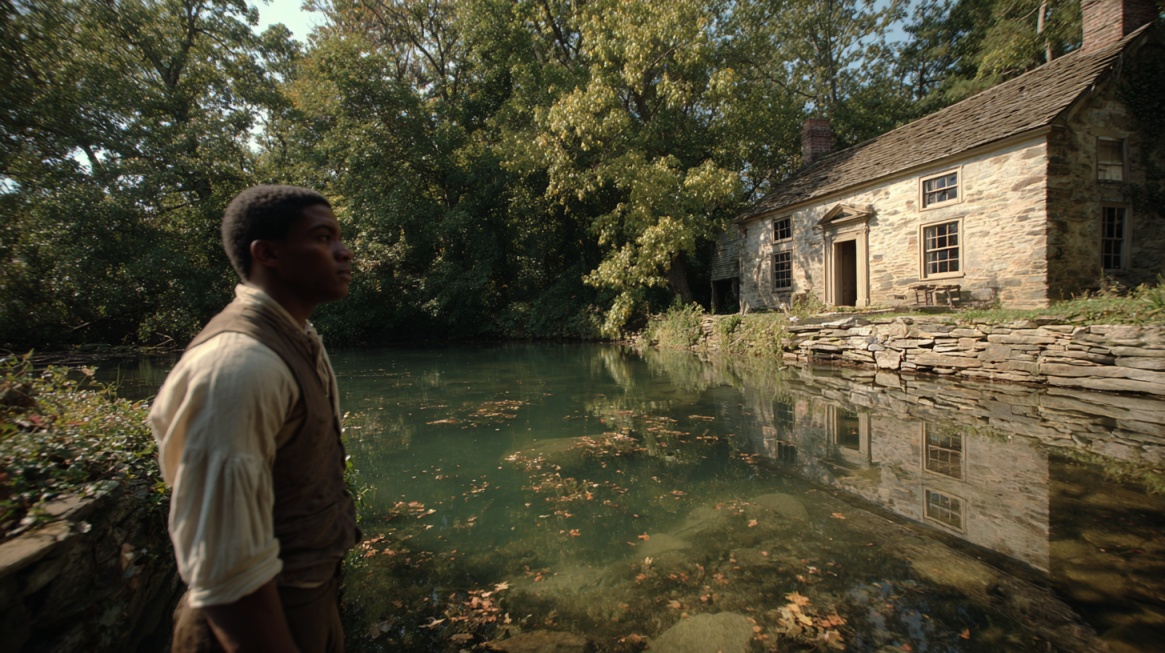
Granite farmhouse built during the nineteenth century introduced a new phase in the property’s history. Structure rose three stories high, which was uncommon for the surrounding rural area.
- Construction using locally sourced granite
- A multi-story design that increased interior space
- A more permanent and durable structure compared to earlier buildings
Later name “Molly Bannaky House” honored Banneker’s grandmother, Molly Welsh Bannaky, connecting the later structure to earlier family history.
Structure differs significantly from the original wooden cabin. Its presence marks a clear shift in ownership and building style.
Creation of the Benjamin Banneker Historical Park
Baltimore County acquired the property during the 1980s. That acquisition led to the establishment of the Benjamin Banneker Historical Park and Museum.
- Preservation of historically important areas tied to Banneker’s life
- Planning of educational exhibits and public access
- Protection of open land connected to earlier agricultural use
Restoration of the stone farmhouse took place in 2004. Work focused on stabilizing the structure and preparing it for public interpretation.
Summary
Banneker property represents multiple historical phases. It began as a family farm in 1737, became a place of scientific work, changed into a nineteenth-century estate, continued as Treuth farmland, and now exists as a public historical park.
The connection between Banneker’s intellectual achievements and the land remains clear. Bannaky House and Trueth Farm mark later chapters tied to the same location.
Ongoing importance lies in recognition of early African American achievement, land ownership, and contribution to American science.